How to defend yourself against Diet Culture during the holidays

I was in a big box hardware store yesterday, looking for purple and orange lights to add to my Halloween decorations. In one aisle, an oversized skeleton let out an evil laugh, while in the next aisle, Christmas music was blaring near the leftover Thanksgiving swag on sale at 20% off. I’m not sure how everyone else feels, but I need breathing room between Halloween, Thanksgiving, and Christmas to take it all in.

Now that it’s October, for many folks, their attempts at dieting are all but a memory. In my experience, patients who succeeded in slimming down have realized some weight gain once their hunger soared out of control and the “healthy diet” fell hard against normalized eating patterns.

In starvation mode, the hungry body fights for calories by accelerating cravings for carbohydrates, which are impossible to ignore. With three holidays back-to-back, there are opportunities for delicious and savory foods that aren’t available any other time of the year. But with new insight and introspection, it doesn’t have to be a recipe for disaster.

This year, I followed the diet industry’s yearly cycle and wrote about ways to rise above it.

How to Avoid Plugging Back into the Diet Culture this January

January is over. How is the weight loss diet going?

Right now, advertisers are heavily focused on holiday giving to maximize sales, which will soon be followed by the dieting and exercise industry’s application of pressure to eat less and move more. And the only way you can attain the thin ideal is with (add whatever diet/exercise company here) in your corner. What a perfect time to declare us all as gluttonous for being “too merry” over the holidays. This year, harness your inner strength so you can turn your back on all this nonsense once and for all.

Three ways to build a healthy body image

It won’t be easy. But nothing worthwhile is easy. I’m going to share with you the accumulation of my experiences with patients who struggle with their weight and their relationship with food. I offer a different approach to the holidays to help you find the confidence to eat and nourish your body on your own terms.   

Practice body compassion

No matter where your weight falls on the BMI scale, your nutrition needs are unique. Most people parrot nutritional information without much thought. If everyone’s doing it, it must be right. Except that it’s not right when people who are otherwise healthy go to extremes to be in a smaller body, or believe that the only way to better health is to lose weight. Ask yourself how much joy you’ve lost by telling yourself you can’t eat certain foods while limiting yourself during social situations. Body compassion will shield you from a negative body image by avoiding unhealthy comparisons. Focus on what you can change instead of what you can’t change.

  • Gratefulness: appreciate how your body works and its functions that keep you alive. All the systems in your body work together to keep you going. As humans, we are aware of our own mortality and possess the ability to change the course of our lives in many ways to achieve positive outcomes.
  • Acceptance: acknowledge the imperfections of your body without harsh judgment. Acknowledge the good things, whether it’s your eyes, your hair, your smile, or your ability to do something most others around you can’t do.  
  • Kindness: Tell yourself that you’re doing your best with what you know right now. As Maya Angelou once said, “Once you know better, do better.” Treat yourself like you would your best friend. Kindness costs nothing.

Tune out the health and wellness chatter. Most of it isn’t worth your time and attention.

Nutrition is a topic everyone has had a lived experience with. It’s not like neurosurgery, where a select few possess the knowledge. Everyone has their list of eat this, not that, but most advice falls within the “I didn’t ask you” category. All the good intentions won’t make it helpful.

Social media makes it extremely difficult to know what advice to trust. Even credentialed health practitioners don’t always share accurate information. They’re experts in their field of practice, but remain severely uneducated in the study of nutrition. I’ve witnessed highly educated practitioners share ideals that were disproven by science long ago. It can be overwhelming, and I sympathize with my patients who come to me looking for clarity.   

Most advice on social media is shared without much thought about the consequences to the viewers. It becomes proliferated by all the clueless and rigid opinions in the comment section. It’s important to know that health practitioners who truly care about your health are not spending time spreading misinformation on social media. They’re in hospitals and clinics working hard to help patients make sense of it all. If you know that social media marketing strives to evoke strong emotions to get a reaction, you’re already halfway there. Here are three ways to navigate nutrition’s complicated landscape.

  • Match the expertise with the advice.
    If a famous actress is selling a weight loss program, chances are it’s a lived experience that worked for them, but would require a complete overhaul of your current lifestyle. It can be hard to tell if what you’re hearing is coming from someone who’s currently struggling with their own issues.
  • Avoid getting pulled in by generalizations
    Savvy marketing uses sound bites to pull buyers in. Notice how many times you hear the words, “all natural, clinically proven, FDA cleared, and lose weight and keep it off.” They create a convincing veil of legitimacy to make a sale by counting on the fact that most people aren’t science experts. But you don’t have to be an expert if you understand what’s behind their tactics.
  • Be skeptical of any nutritional advice from friends or loved ones. People who care about us often believe they’re helping when they comment on something they see as wrong. They want to fix it. Weight gain is almost always viewed negatively and criticized without understanding the true cause. Weight loss is celebrated even if it happens unintentionally. Health advice given without proper training and experience shouldn’t be taken seriously, regardless of good intentions.

Ask yourself how you can be more flexible

The holidays can trigger individuals with rigid eating habits, picky eaters, and patients with eating disorders. Selecting foods only for perceived health benefits is limiting and promotes anxiety around eating. Rigidity should never justify restricting a meal when your thoughts tell you there are no good options. Food is all around us, but unless you’re financially unfortunate, there is no lack of nutritious food. Start with these ways to increase flexibility around foods from any source.

  •  Focus on healthy eating behavior, not the health of specific foods. The efficacy of nutrition is found in pairing many foods together. Health is in variety. Eating one type of food while forgoing many others only leads to vitamin and mineral deficiencies.
  • If a food is new to you, try a small sample. The best way to know if you will like an unfamiliar food is to use all your senses. Judging a food by looks won’t give you enough information. You won’t know what you could be missing out on.
  • Be curious about any anxiety related to uncertainties around food. Be mindful of any fear related to certain foods and why. Find a qualified practitioner if you suspect or have a history of an eating disorder.  

The power to be as you are

While practicing compassion and tuning out the noise of unsound advice, you will find the flexibility you need to be present during the holidays. You’ll no longer be lured in by the “new year, new you” dogma. Balancing a mix of self-care while going with the flow can keep you strong enough to push away the diet culture’s insistence that you need to fix yourself. You’ll gain the power and confidence to believe that you are worthy of being and looking just as you are.
A Daughter on Father’s Day: Coping with His Absence

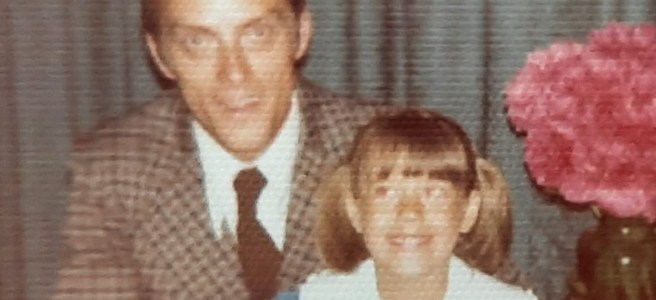
Some mornings, I wake up wishing someone would stop the Earth so I can get off. This Father’s Day morning is one of them. This year, I’m the same age my dad was when he died. He passed three months and 12 days before he turned fifty-six on Christmas Day. He always joked about how he was “ripped off” by having to share his birthday with Christmas. As a child growing up in a poor household, he got one gift for his birthday and Christmas. As a father of three, he showered us kids with way more than enough presents on Christmas morning.

If he were still around, I think he’d be proud of his daughter. A college graduate, married for 24 years, who is now heading towards retirement. It’s sad to think that if he were still around, my path in life might have been different. So, I chose to believe my accomplishments would have given him something to brag about.

My dad cared a lot about his family, but was controlling to a fault. The stories he told about his childhood illustrate why he did things his way and believed his way was the only way. He grew up with two brothers and a single mother. My grandmother suffered from alcohol abuse disorder. All I knew were bits and pieces of stories that were brought up in conversation. My mom told me my dad said he and his brothers would come home from school to find my grandma passed out. He also said how awful he felt one day when he saw his dad walking alone on the street. He hadn’t seen him for a long time and described him as a broken man. I don’t remember exactly how the conversation went, only that my dad was heartbroken.

As I saw it, during the last few years of his life, my father gave up living. He isolated himself from friends and family. His health took a turn for the worse. One of my darkest memories as a teen was visiting my dad in the ICU when a nurse asked my mother how long my father had been diabetic. My mom looked surprised and said, “I don’t know,” words she always used to deflect the harshness of my father.

Before ending up in the hospital, my dad drank 2 liters of soda every day. My mother recalled my dad saying his doctor told him he had diabetes, but he didn’t believe it. No one could tell my father anything, even trained professionals.

I always thought that my father was tough. Until one day, he caught me off guard by showing a vulnerable side. One morning, I came out of my room and found him sitting on the couch, crying in the living room. He told me he was feeling sick and hated that he couldn’t take care of our home the way he used to. He said he didn’t want to be a burden to anyone. I didn’t know what to do as my mind raced and I felt my body go numb. It was the first time I ever saw tears streaming down his face. All I could do at the time was hug him. Through the awkwardness, not many words came out of my mouth. The right words never came.

I’m sure there was cognitive impairment as the symptoms of diabetes got worse. Excessive thirst, accompanied by a craving for carbohydrates, is a classic sign that shouldn’t be ignored. It could’ve played a part in his decision to isolate himself and allow his health to decline. The day he cried in front of me also might have been the only time he tried to tell someone how he was feeling. But what’s a kid going to do?

My mom begged him to see his doctor, but he refused. I came home from high school one afternoon to my mom in a panic. She told me to help her get my dad into the car. He was noticeably incoherent and couldn’t walk without us holding him up. My mom drove him to the doctor’s office, and he advised her to take him to the emergency room right away. He was in what I believed to be a Hyperosmolar Hyperglycemic State, which needs immediate medical attention.

The doctors said a stroke and severe hyperglycemia ended his life. He also suffered gangrene in his large intestine, which was operated on, but his condition never improved. Both of us were by his side in the hospital when he passed around three in the morning. I don’t know which was worse, watching my father pass away or watching him mouthing the words “home” in the ICU while I felt helpless. There wasn’t much either of us could do.

At fifty-six, I think I know how my dad was feeling.

Rare as it was, there was a time when my dad and I found common ground. In the early eighties, HBO’s Red Skelton’s Funny Faces came on. Together, we watched the beginning monologue and shared a laugh. He appreciated that a person my age thought he was funny. Red was well past his prime but was still up on his game. I used to tease my dad about the famous heroes of his day. He would joke in response, but now I wonder if he felt hurt by it.  

I remember how my dad watched his favorite entertainers fall out of favor while 80s B-rated flicks and heavy metal music of my generation became popular. Today, social media is full of memes poking fun at the big hairstyles of the eighties which illustrates that I’m no longer in the prime of my life.

It took me years to forgive my father for his controlling nature, which didn’t prepare me for a future without him. He didn’t finish high school, yet he set an example by working the better part of his life to provide for his family. He tried to do right for his health by giving up cigarettes, alcohol, and taking his blood pressure medicine.

Whenever I complained about my life as a teenager, he used to say I had it much better than he did. If he saw me unhappy, he’d say, “Act happy, and you’ll be happy.” None of that advice was helpful back then, but I understand why he said it. I’m sure there were plenty of times he had to act happy. Especially as a child on Christmas morning while opening his one gift.

It’s time to make the best of every moment.

Now that my mom is in her seventies, I cherish our time together as she reminisces about her past. My mom talks more about her side of the family. She’s answered questions about things I’ve always wanted to know. She speaks highly of the wisdom my grandpa shared with her when she was little. She has memories of sitting on her great-grandfather’s lap at the age of four. Within these stories, I learn more about myself.

Neither of my parents had much when they grew up, but they always gave me what I needed. My mom always says, “I’ve got your back.” Every day, I work hard to give her good reasons to do so.  

Telling people to be healthy misses the mark.

Whenever someone blurts out, “Just eat healthier and exercise more,” and all your problems will go away, I know they don’t get it. In the field of psychology, it’s well understood that how we act is driven by how we feel and think. This off-the-cuff advice misses this complexity. It disregards a life story that correlates with the way people take care of themselves. Since we are our own worst critics, we aren’t always going to do what’s best for our bodies.

What we believe about ourselves plays a huge part in health outcomes and the aging process. Healthy habits are always within our reach if we want to work on them. Yet most of them are unsustainable. The story is always the same. I used to exercise, but now I work 60 hours a week. I lost twenty pounds but gained back thirty after my mom died.

Personal health remains at the bottom of the list in our busy society despite the attention it receives. No one wants to admit to not making it a priority. It’s easy to criticize others for neglecting their health when you don’t know the path their life is on.

We need to stop talking and listen to what others are saying. Put aside the righteousness of whatever it is you think you know. In this world, too many of us feel like we’re not being heard and feel the pressure to justify our positions. Sometimes it just is. Accepting someone’s current situation can go much further when we don’t say anything at all.

How to Avoid Plugging Back into the Diet Culture this January

Here we go again! It’s that time of year when “being merry” fades into another tiresome weight loss resolution. The diet industry once more pushes the promise of losing weight and keeping it off. If you are healthy and are planning to go on another diet to shrink your body, here are some reasons you might want to reconsider.

The diet industry is a big part of the diet culture. It uses generalized assumptions to motivate us to criticize ourselves, or perhaps instill a negative body image that wasn’t there in the first place. Internalizing standards of thinness while wasting precious time achieving it can produce dire psychological consequences. Dieting is a risk factor for developing a serious eating disorder.

January is a prime time to lure folks back into unrealistic resolutions under the guise of health. People want to get healthy by reducing their food intake, which is short-lived as they slide back into old eating habits within a few weeks. The all-too-obvious clue is that weight loss programs aren’t sustainable. But what is sustainable? The availability of another recycled weight loss program that makes the same empty promises year after year. The emphasis is on changing behavior while focusing less on other factors that cause weight gain or the mental health consequences of chronic dieting.

How can you stop the tidal wave from dragging you back in? Start by deconstructing the ads you see. Look for baseless generalizations. Question the easy solutions to difficult problems. Here are four concepts to awaken your skepticism.

Body acceptance isn’t profitable, but failure is.

The body transformation industry needs a conduit to low self-esteem, or it won’t survive. It’ll lie by withholding the truth about how our bodies grow, develop, and mature. By tapping into the desire for self-improvement, it wants you to believe that every extra pound, wrinkle, and gray hair that deviates from the ideal standard is your fault. They sell hope while they coach you into a better life. They don’t want you to accept what you’re born with and will always convince you to keep paying despite the evidence that what they’re selling isn’t working.

Body acceptance means, in part, accepting, respecting, and caring for your body even though you don’t like certain aspects. Acceptance of yourself reduces the power of ideal standards and the desire to subscribe to them. Failure has no meaning in this perspective.

If you’re new to body acceptance here are three ways to begin moving toward it:

  1. Don’t compare yourself to anyone else. This includes comparing your body size to the images of the before and after photos in weight loss ads. Instead, focus on how far you’ve come. Whether you survived or achieved it’s your story.
  2. Whenever a bad thought about your body surfaces, say (out loud) something nice about yourself. Choose words you can believe in.
  3. Acknowledge your worth and value in the body you are in right now.

Sure, it’s easier said than done, but how is not accepting yourself working so far?

Diet culture encourages you to demean yourself.

I’m too fat. I need to stop eating so much sugar. I’m getting old. How many times have phrases like these entered your mind? The diet industry is notorious for promoting ways to compare yourself to others. These generalizations can apply to almost anyone:

  • “Just eat the food and lose the weight!”
  • “Our program is clinically proven to help you lose weight.”
  • “Join millions of others who lost weight and kept it off.”
  • “I feel like my youth came back, it’s amazing!”
  • “Losing weight gave me the energy and the confidence I need!”

One popular diet company encourages food logging. Food records don’t work for everyone and recording every bite of food is unnatural. Obsessing over calories and portion sizes encourages unrealistic expectations and unhealthy categorization of certain foods. The potential danger of keeping a food diary is that it can worsen the symptoms of an eating disorder.

Separate yourself from the gimmick of weight loss.

Any company selling a product or service, whether it involves losing weight (or not), works toward a bottom line. The small ones want to earn profits, and the larger ones owe their shareholders. At what point are they focusing on their customer’s best interests?

People don’t start out believing they need to lose weight. At some point, we all develop beliefs based on the culture that surrounds us. We are taught that fat is bad. In developed countries and on the internet limiting exposure to thousands of weight loss ads is impossible. The diet industry seeks out the vulnerable and coerces them into the fantasy of weight loss for a better life. Their message tells them what nature gave them, isn’t good enough. Every ad has its niche, but all accomplish the same thing, to make viewers fear fat.

You are good enough now not in some future utopia.

There’s no guidebook to life. So don’t leave your life in the hands of conglomerates peddling unrealistic standards that convince you into useless misery. Protect yourself by knowing that most ideals about body size aren’t your own, they are learned. How you internalize them will affect how you treat yourself, and not in a positive way. When it comes down to it, you get to decide what comes into your life and what does not.

All of us are caught in a tug-of-war between the food industry selling convenience food and the diet industry telling us we’re fat. The fault is always placed entirely on consumers while they harp on self-control. Most of us are forced to work long hours to pay for the rising cost of food with less time to figure out how to feed ourselves.

As this post was written, the diet industry is scrambling to stay competitive in response to the heightened demand for GLP-1 injections. The price for weight loss skyrocketed. Even with insurance, patients on Wegovy can expect to pay $650 monthly for 28 doses, about $7800 a year. Not to mention the inconvenience of the weekly injections while placing sharps in an FDA-approved container and legally disposing of them. As with all medicines, there are risks, and once they are discontinued the weight returns.

DISCLAIMER: The Green Apple Dietitian blog provides nutrition information for education only and is not intended to offer medical advice or cure any health conditions. The content should NEVER be used as a substitute for medical advice, diagnosis, or treatment of any health condition or problem. Any questions regarding your diet and health should be addressed to your specific healthcare providers. Never disregard professional medical advice or delay seeking it because of something you have read on this blog.

Green Apple Dietitian makes no warranties expressed or implied regarding the accuracy, completeness, timeliness, comparative or controversial nature, or usefulness of any information posted or shared on this blog. Green Apple Dietitian does not assume any risk whatsoever for your use of any information contained herein that was posted or shared on this blog in the past, present, or future. By accessing this blog, you agree that neither Green Apple Dietitian nor any other party, is to be held liable or otherwise responsible for any decision made, or any action taken or not taken, due to your use of any information presented on this blog website.