Help feed the hungry. How to make your charitable contributions count.

Photo by Alexander Mass on Unsplash

I feel compelled to write about helping the less fortunate in the wake of the SNAP benefits fiasco. Access to food is a fundamental right, no matter race, gender, body size, age, or economic status. There’s no reason on Earth that food should be denied to anyone.

In all the years I’ve been a registered dietitian, food distribution remains a system with many forces that challenge it. There are days when my emotional side doesn’t agree with food service regulations that lead to food waste, despite my education and experience in dining services.

Reasons for food waste include:

  • Overage: When the amount of food served is less than what the kitchen forecasted. People don’t eat as much as kitchen staff anticipated, there’s poor inventory management, or a lack of proper storage.
  • A decline in food quality, such as spoilage, increases the risk of food-borne illnesses, which can be serious or deadly for certain segments of our population.
  • Aesthetics: Ugly edible food that doesn’t meet a retailer’s standards is discarded. How food looks to us is a normal biological defense mechanism against unsafe foods. If it doesn’t look good, we won’t eat it.

Yet my emotions surface when I observe full untouched pans of food getting thrown away minutes after the scheduled meal ends. At the very least, it should be available to the employees as a benefit of employment. Workers’ salaries in food service range from $11 to $19 per hour in the US, the last time I checked, which is abysmal in our current economy.  I’m burnt out on hearing about food and staff shortages, while food service employees live in their cars.

I’m not here to claim I know everything about food service operations, but to the casual observer, discarding food always comes off as a stingy way of doing business. I don’t have to tell anyone that we seriously need to do better.

But I digress…

There’s a point when ranting no longer serves its purpose. It’s time to focus on making a difference. Here are some things I learned along the way, which will hopefully make it easier for folks to lend a helping hand. Let’s not become deer in headlights because we don’t know what to do.

How to feed the hungry. Don’t assume. Ask.

Start with the obvious, like donating food at a local grocery store. During the holidays, chances are you’ll see the familiar barrel dropped off by the local food pantry. There might even be a handy list of what foods they are asking for. Grocery stores also offer ready-to-eat meals or prepackaged bags of food for purchase. The hard work is already done.

Feeding America is nationally known. Log on to their website to learn about many aspects of giving. It’s a good place to begin if you’re starting a journey toward helping others.

Become more familiar with your local food bank. Visit their website, call them, and schedule a visit. Volunteers are more than happy to help navigate ways to help and are thankful when charitable people reach out. It’s the best place for the most current information about local people in need.

How to organize yourself and others to give generously

Alone or in a group, you can:

  • Start a food drive. Visit your local food pantry’s website and fill out an online form to have volunteers drop off one of their food barrels during a designated collection time. Otherwise, you can arrange to drop off donations.
  • Volunteer with family, friends, or co-workers to fill up food stock boxes, or participate in Meals on Wheels, to feed the elderly in need
  • Donate money directly on the pantry’s website or purchase items through their Amazon wish list. This is by far the easiest way to contribute, and you can do it periodically throughout the year.

Bust the myths of charitable giving. To make your donation count, don’t:

  • Assume what you eat will be the same as what everyone else eats. Not everyone has access to a stove, other cooking appliances, or even refrigeration. In lower-income neighborhoods, apartments for rent don’t always come with modern conveniences.
  • Buy bags of candy because you think that poor children never get to eat any. Yes, all children deserve candy or a cake on their birthday without judgment, but let’s leave that decision to the parents. Aim at acquiring food components that can be prepared and served within their economic environment. Research shows kids do better academically when they receive proper nourishment.    
  • Clean out your pantry of old and expired food to give to charity. If you wouldn’t eat it, don’t expect others to, or to be grateful for food that’s past its expiration date.
  • Push your healthy eating expectations, which only leads to unhelpful assumptions, by expecting them to choose foods that don’t make sense financially. Help them get access to all foods in every food group.

Follow these tips and develop a way to give that will work for you and your budget. It’s time we stop accepting government shutdowns that cause unnecessary delays and do what we can to lift others. Let’s build a society where everyone can reap the benefits of a dignified life.

Links to explore:

U.S. Hunger Relief Organization | Feeding America

Find Your Local Food Bank | Feeding America

Volunteer Opportunities at Your Local Food Bank | Feeding America

Effects of poverty, hunger and homelessness on children and youth

The New York Times Replica Edition

Misfits Market, Imperfect Foods & the Battle Against Food Waste – Consumer Reports
How to defend yourself against Diet Culture during the holidays

I was in a big box hardware store yesterday, looking for purple and orange lights to add to my Halloween decorations. In one aisle, an oversized skeleton let out an evil laugh, while in the next aisle, Christmas music was blaring near the leftover Thanksgiving swag on sale at 20% off. I’m not sure how everyone else feels, but I need breathing room between Halloween, Thanksgiving, and Christmas to take it all in.

Now that it’s October, for many folks, their attempts at dieting are all but a memory. In my experience, patients who succeeded in slimming down have realized some weight gain once their hunger soared out of control and the “healthy diet” fell hard against normalized eating patterns.

In starvation mode, the hungry body fights for calories by accelerating cravings for carbohydrates, which are impossible to ignore. With three holidays back-to-back, there are opportunities for delicious and savory foods that aren’t available any other time of the year. But with new insight and introspection, it doesn’t have to be a recipe for disaster.

This year, I followed the diet industry’s yearly cycle and wrote about ways to rise above it.

How to Avoid Plugging Back into the Diet Culture this January

January is over. How is the weight loss diet going?

Right now, advertisers are heavily focused on holiday giving to maximize sales, which will soon be followed by the dieting and exercise industry’s application of pressure to eat less and move more. And the only way you can attain the thin ideal is with (add whatever diet/exercise company here) in your corner. What a perfect time to declare us all as gluttonous for being “too merry” over the holidays. This year, harness your inner strength so you can turn your back on all this nonsense once and for all.

Three ways to build a healthy body image

It won’t be easy. But nothing worthwhile is easy. I’m going to share with you the accumulation of my experiences with patients who struggle with their weight and their relationship with food. I offer a different approach to the holidays to help you find the confidence to eat and nourish your body on your own terms.   

Practice body compassion

No matter where your weight falls on the BMI scale, your nutrition needs are unique. Most people parrot nutritional information without much thought. If everyone’s doing it, it must be right. Except that it’s not right when people who are otherwise healthy go to extremes to be in a smaller body, or believe that the only way to better health is to lose weight. Ask yourself how much joy you’ve lost by telling yourself you can’t eat certain foods while limiting yourself during social situations. Body compassion will shield you from a negative body image by avoiding unhealthy comparisons. Focus on what you can change instead of what you can’t change.

  • Gratefulness: appreciate how your body works and its functions that keep you alive. All the systems in your body work together to keep you going. As humans, we are aware of our own mortality and possess the ability to change the course of our lives in many ways to achieve positive outcomes.
  • Acceptance: acknowledge the imperfections of your body without harsh judgment. Acknowledge the good things, whether it’s your eyes, your hair, your smile, or your ability to do something most others around you can’t do.  
  • Kindness: Tell yourself that you’re doing your best with what you know right now. As Maya Angelou once said, “Once you know better, do better.” Treat yourself like you would your best friend. Kindness costs nothing.

Tune out the health and wellness chatter. Most of it isn’t worth your time and attention.

Nutrition is a topic everyone has had a lived experience with. It’s not like neurosurgery, where a select few possess the knowledge. Everyone has their list of eat this, not that, but most advice falls within the “I didn’t ask you” category. All the good intentions won’t make it helpful.

Social media makes it extremely difficult to know what advice to trust. Even credentialed health practitioners don’t always share accurate information. They’re experts in their field of practice, but remain severely uneducated in the study of nutrition. I’ve witnessed highly educated practitioners share ideals that were disproven by science long ago. It can be overwhelming, and I sympathize with my patients who come to me looking for clarity.   

Most advice on social media is shared without much thought about the consequences to the viewers. It becomes proliferated by all the clueless and rigid opinions in the comment section. It’s important to know that health practitioners who truly care about your health are not spending time spreading misinformation on social media. They’re in hospitals and clinics working hard to help patients make sense of it all. If you know that social media marketing strives to evoke strong emotions to get a reaction, you’re already halfway there. Here are three ways to navigate nutrition’s complicated landscape.

  • Match the expertise with the advice.
    If a famous actress is selling a weight loss program, chances are it’s a lived experience that worked for them, but would require a complete overhaul of your current lifestyle. It can be hard to tell if what you’re hearing is coming from someone who’s currently struggling with their own issues.
  • Avoid getting pulled in by generalizations
    Savvy marketing uses sound bites to pull buyers in. Notice how many times you hear the words, “all natural, clinically proven, FDA cleared, and lose weight and keep it off.” They create a convincing veil of legitimacy to make a sale by counting on the fact that most people aren’t science experts. But you don’t have to be an expert if you understand what’s behind their tactics.
  • Be skeptical of any nutritional advice from friends or loved ones. People who care about us often believe they’re helping when they comment on something they see as wrong. They want to fix it. Weight gain is almost always viewed negatively and criticized without understanding the true cause. Weight loss is celebrated even if it happens unintentionally. Health advice given without proper training and experience shouldn’t be taken seriously, regardless of good intentions.

Ask yourself how you can be more flexible

The holidays can trigger individuals with rigid eating habits, picky eaters, and patients with eating disorders. Selecting foods only for perceived health benefits is limiting and promotes anxiety around eating. Rigidity should never justify restricting a meal when your thoughts tell you there are no good options. Food is all around us, but unless you’re financially unfortunate, there is no lack of nutritious food. Start with these ways to increase flexibility around foods from any source.

  •  Focus on healthy eating behavior, not the health of specific foods. The efficacy of nutrition is found in pairing many foods together. Health is in variety. Eating one type of food while forgoing many others only leads to vitamin and mineral deficiencies.
  • If a food is new to you, try a small sample. The best way to know if you will like an unfamiliar food is to use all your senses. Judging a food by looks won’t give you enough information. You won’t know what you could be missing out on.
  • Be curious about any anxiety related to uncertainties around food. Be mindful of any fear related to certain foods and why. Find a qualified practitioner if you suspect or have a history of an eating disorder.  

The power to be as you are

While practicing compassion and tuning out the noise of unsound advice, you will find the flexibility you need to be present during the holidays. You’ll no longer be lured in by the “new year, new you” dogma. Balancing a mix of self-care while going with the flow can keep you strong enough to push away the diet culture’s insistence that you need to fix yourself. You’ll gain the power and confidence to believe that you are worthy of being and looking just as you are.

A Daughter on Father’s Day: Coping with His Absence

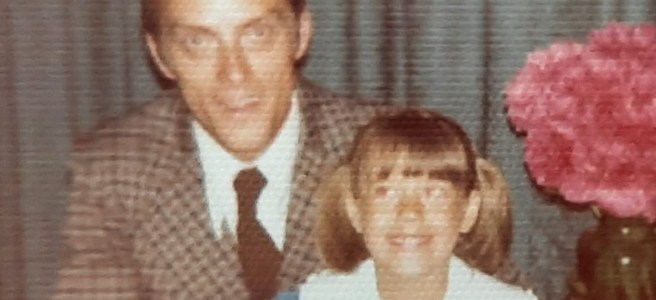
Some mornings, I wake up wishing someone would stop the Earth so I can get off. This Father’s Day morning is one of them. This year, I’m the same age my dad was when he died. He passed three months and 12 days before he turned fifty-six on Christmas Day. He always joked about how he was “ripped off” by having to share his birthday with Christmas. As a child growing up in a poor household, he got one gift for his birthday and Christmas. As a father of three, he showered us kids with way more than enough presents on Christmas morning.

If he were still around, I think he’d be proud of his daughter. A college graduate, married for 24 years, who is now heading towards retirement. It’s sad to think that if he were still around, my path in life might have been different. So, I chose to believe my accomplishments would have given him something to brag about.

My dad cared a lot about his family, but was controlling to a fault. The stories he told about his childhood illustrate why he did things his way and believed his way was the only way. He grew up with two brothers and a single mother. My grandmother suffered from alcohol abuse disorder. All I knew were bits and pieces of stories that were brought up in conversation. My mom told me my dad said he and his brothers would come home from school to find my grandma passed out. He also said how awful he felt one day when he saw his dad walking alone on the street. He hadn’t seen him for a long time and described him as a broken man. I don’t remember exactly how the conversation went, only that my dad was heartbroken.

As I saw it, during the last few years of his life, my father gave up living. He isolated himself from friends and family. His health took a turn for the worse. One of my darkest memories as a teen was visiting my dad in the ICU when a nurse asked my mother how long my father had been diabetic. My mom looked surprised and said, “I don’t know,” words she always used to deflect the harshness of my father.

Before ending up in the hospital, my dad drank 2 liters of soda every day. My mother recalled my dad saying his doctor told him he had diabetes, but he didn’t believe it. No one could tell my father anything, even trained professionals.

I always thought that my father was tough. Until one day, he caught me off guard by showing a vulnerable side. One morning, I came out of my room and found him sitting on the couch, crying in the living room. He told me he was feeling sick and hated that he couldn’t take care of our home the way he used to. He said he didn’t want to be a burden to anyone. I didn’t know what to do as my mind raced and I felt my body go numb. It was the first time I ever saw tears streaming down his face. All I could do at the time was hug him. Through the awkwardness, not many words came out of my mouth. The right words never came.

I’m sure there was cognitive impairment as the symptoms of diabetes got worse. Excessive thirst, accompanied by a craving for carbohydrates, is a classic sign that shouldn’t be ignored. It could’ve played a part in his decision to isolate himself and allow his health to decline. The day he cried in front of me also might have been the only time he tried to tell someone how he was feeling. But what’s a kid going to do?

My mom begged him to see his doctor, but he refused. I came home from high school one afternoon to my mom in a panic. She told me to help her get my dad into the car. He was noticeably incoherent and couldn’t walk without us holding him up. My mom drove him to the doctor’s office, and he advised her to take him to the emergency room right away. He was in what I believed to be a Hyperosmolar Hyperglycemic State, which needs immediate medical attention.

The doctors said a stroke and severe hyperglycemia ended his life. He also suffered gangrene in his large intestine, which was operated on, but his condition never improved. Both of us were by his side in the hospital when he passed around three in the morning. I don’t know which was worse, watching my father pass away or watching him mouthing the words “home” in the ICU while I felt helpless. There wasn’t much either of us could do.

At fifty-six, I think I know how my dad was feeling.

Rare as it was, there was a time when my dad and I found common ground. In the early eighties, HBO’s Red Skelton’s Funny Faces came on. Together, we watched the beginning monologue and shared a laugh. He appreciated that a person my age thought he was funny. Red was well past his prime but was still up on his game. I used to tease my dad about the famous heroes of his day. He would joke in response, but now I wonder if he felt hurt by it.  

I remember how my dad watched his favorite entertainers fall out of favor while 80s B-rated flicks and heavy metal music of my generation became popular. Today, social media is full of memes poking fun at the big hairstyles of the eighties which illustrates that I’m no longer in the prime of my life.

It took me years to forgive my father for his controlling nature, which didn’t prepare me for a future without him. He didn’t finish high school, yet he set an example by working the better part of his life to provide for his family. He tried to do right for his health by giving up cigarettes, alcohol, and taking his blood pressure medicine.

Whenever I complained about my life as a teenager, he used to say I had it much better than he did. If he saw me unhappy, he’d say, “Act happy, and you’ll be happy.” None of that advice was helpful back then, but I understand why he said it. I’m sure there were plenty of times he had to act happy. Especially as a child on Christmas morning while opening his one gift.

It’s time to make the best of every moment.

Now that my mom is in her seventies, I cherish our time together as she reminisces about her past. My mom talks more about her side of the family. She’s answered questions about things I’ve always wanted to know. She speaks highly of the wisdom my grandpa shared with her when she was little. She has memories of sitting on her great-grandfather’s lap at the age of four. Within these stories, I learn more about myself.

Neither of my parents had much when they grew up, but they always gave me what I needed. My mom always says, “I’ve got your back.” Every day, I work hard to give her good reasons to do so.  

Telling people to be healthy misses the mark.

Whenever someone blurts out, “Just eat healthier and exercise more,” and all your problems will go away, I know they don’t get it. In the field of psychology, it’s well understood that how we act is driven by how we feel and think. This off-the-cuff advice misses this complexity. It disregards a life story that correlates with the way people take care of themselves. Since we are our own worst critics, we aren’t always going to do what’s best for our bodies.

What we believe about ourselves plays a huge part in health outcomes and the aging process. Healthy habits are always within our reach if we want to work on them. Yet most of them are unsustainable. The story is always the same. I used to exercise, but now I work 60 hours a week. I lost twenty pounds but gained back thirty after my mom died.

Personal health remains at the bottom of the list in our busy society despite the attention it receives. No one wants to admit to not making it a priority. It’s easy to criticize others for neglecting their health when you don’t know the path their life is on.

We need to stop talking and listen to what others are saying. Put aside the righteousness of whatever it is you think you know. In this world, too many of us feel like we’re not being heard and feel the pressure to justify our positions. Sometimes it just is. Accepting someone’s current situation can go much further when we don’t say anything at all.