Easy and Delicious Mashed Cauliflower

How a vegetable is prepared is one of the main reasons we don’t like to eat them. Let’s face it, plain steamed cauliflower can taste bland to some folks. This recipe is a game-changer if you want more vegetables in your diet. By adding simple ingredients, you can boost the flavor of this otherwise boring white vegetable.  

All you need is a microwave and an immersion blender to make this easy recipe. Microwaving cuts down on cooking time and keeps the vitamins and minerals intact by steaming instead of boiling. Pureeing them afterward gives the cauliflower a silky-smooth texture. At first glance, they just might be mistaken for mashed potatoes!

Mashed Cauliflower Recipe

  • 1 head of cauliflower, chopped into small florets
  • 1 Tbsp butter
  • Dairy: 1-2 tsp sour cream, OR plain Greek yogurt, OR a splash of your favorite milk
  • ½ tsp Salt, if desired
  • ¼ tsp pepper

Rinse the florets in a colander and drain. Place cauliflower into a microwave-safe bowl. Microwave on high for 5 minutes. Break up the cauliflower into smaller pieces and microwave for another 3-5 minutes until they are very tender. Add butter, your choice of dairy, and salt and pepper. With a stick mixer, puree cauliflower into a fluffy texture. Makes about 4 servings.

Dietitian Tip: Don’t forget to add a carbohydrate alongside the mashed cauliflower as part of your meal. Complex carbohydrates give us energy and are an important part of a balanced diet.

Pair mashed cauliflower with:

  • Hamburger, veggie burger, or deli sandwich
  • Whole wheat or pita bread sandwich with beef, chicken, fish, or plant-based protein
  • Beef, chicken, or fish with corn-on-the-cob or green peas
Easy Homemade Stovetop Mac & Cheese

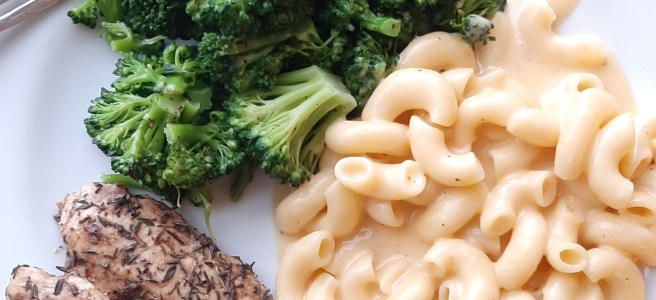
If you’re new to cooking, there are some things you should know that will help make this recipe a success. It starts with a quality cheese sauce. When butter and flour are mixed it’s called a roux. The roux acts as a thickener for the sauce. Combined with milk and cheese, it becomes silky-smooth. This is what makes mac and cheese the ultimate comfort food. It couldn’t be accomplished by melted cheese alone. Be patient with this recipe if you’ve never made mac and cheese from scratch. It might take a couple of tries to get it to your liking.

When selecting cheese, stay away from pre-shredded varieties. They have a non-clumping ingredient to keep the cheese from clumping together in the package. Unfortunately, this ingredient causes the cheese to become very stringy when melted into the white sauce. Speaking from experience, the sauce will be a complete waste. It’ll be worth it to get a quality block of sharp cheddar cheese and grate it yourself. There are so many varieties including white cheddar that will perform well for this recipe.

Easy Homemade Stovetop Mac & Cheese Recipe

Ingredients

  • 8 oz elbow macaroni
  • 2 Tbsp unsalted butter
  • 2 Tbsp all-purpose flour
  • 1 ½ cups milk
  • 4-6 oz sharp cheddar cheese, grated
  • ½ tsp salt (optional)
  • Dash black pepper

Directions

In a large pot, cook the macaroni according to the package directions. Drain and set aside. In the same pot, melt the butter over medium heat. Whisk in the flour, stirring consistently until smooth, about 1 minute. Then slowly whisk in the milk, and salt and pepper, if desired. Stir occasionally. Simmer for about 5 minutes until the mixture thickens. Whisk in the cheese until fully melted. Stir in the cooked macaroni until thoroughly blended. Serve immediately.

The recipe makes about 6 servings. Serving size 1 cup. As a side, ½ cup.

Green Apple Dietitian tips

  • Serve this dish with steamed vegetables like broccoli or carrots or a tossed green salad
  • For a higher protein meal, serve 4-6 oz chicken or beef with mac and cheese on the side. Keep it vegetarian by serving it with sauteed squares of extra-firm tofu
  • Spice up your mac and cheese with a pinch of nutmeg, or 1 tsp mustard powder and ¼ tsp paprika
  • Add a splash of water or milk to the desired consistency if the mac and cheese dry out

Easy Roasted Squash and Pumpkin seeds

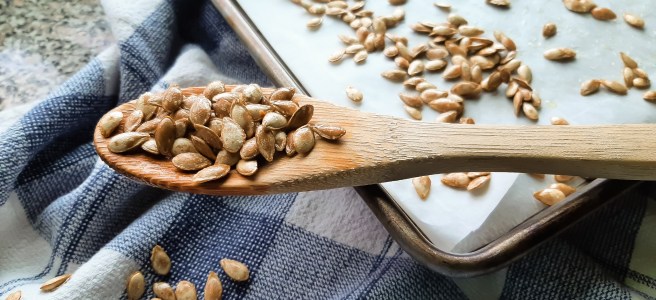
An acorn or butternut squash can yield about ¼ cup of seeds while a pumpkin, depending on the size, can yield 1-2 cups of seeds or more. Since both are a type of gourd, the seeds look very similar. Here’s a recipe for a single serving size or more.

Acorn or Butternut Squash seeds

  • 1/4 cup seeds
  • 1/2 tsp melted butter or olive oil
  • Salt and pepper to taste

Pumpkin seeds

  • 1 cup seeds
  • 2 tsp melted butter or olive oil
  • Salt and pepper to taste

Using a large spoon, scoop the seeds out of a squash or pumpkin, then pour them into a colander. While running water over the seeds, separate them from the vegetable bits. Once clean, spread the seeds single layer on a clean kitchen towel. Pat any extra water off the seeds with a paper towel. Let them dry overnight.

Pre-heat oven to 325°F.

In a small bowl, toss the seeds with melted butter or oil until coated. Sprinkle with salt and pepper to taste. Spread the seeds in a single layer on a baking pan ungreased or lined with parchment paper.

Bake 15 to 25 minutes until light golden brown. Stir every 10 minutes or so and check for doneness. Let the seeds cool about 10 minutes before serving.

Serving size: ¼ cup

Dietitian tip:

If you have a little more time, you can boil the seeds before drying so they will bake more evenly. In a saucepan, add enough water to cover the seeds and simmer for 10 minutes, dry then bake.